Takeaways from our Ghostwriter Hackathon
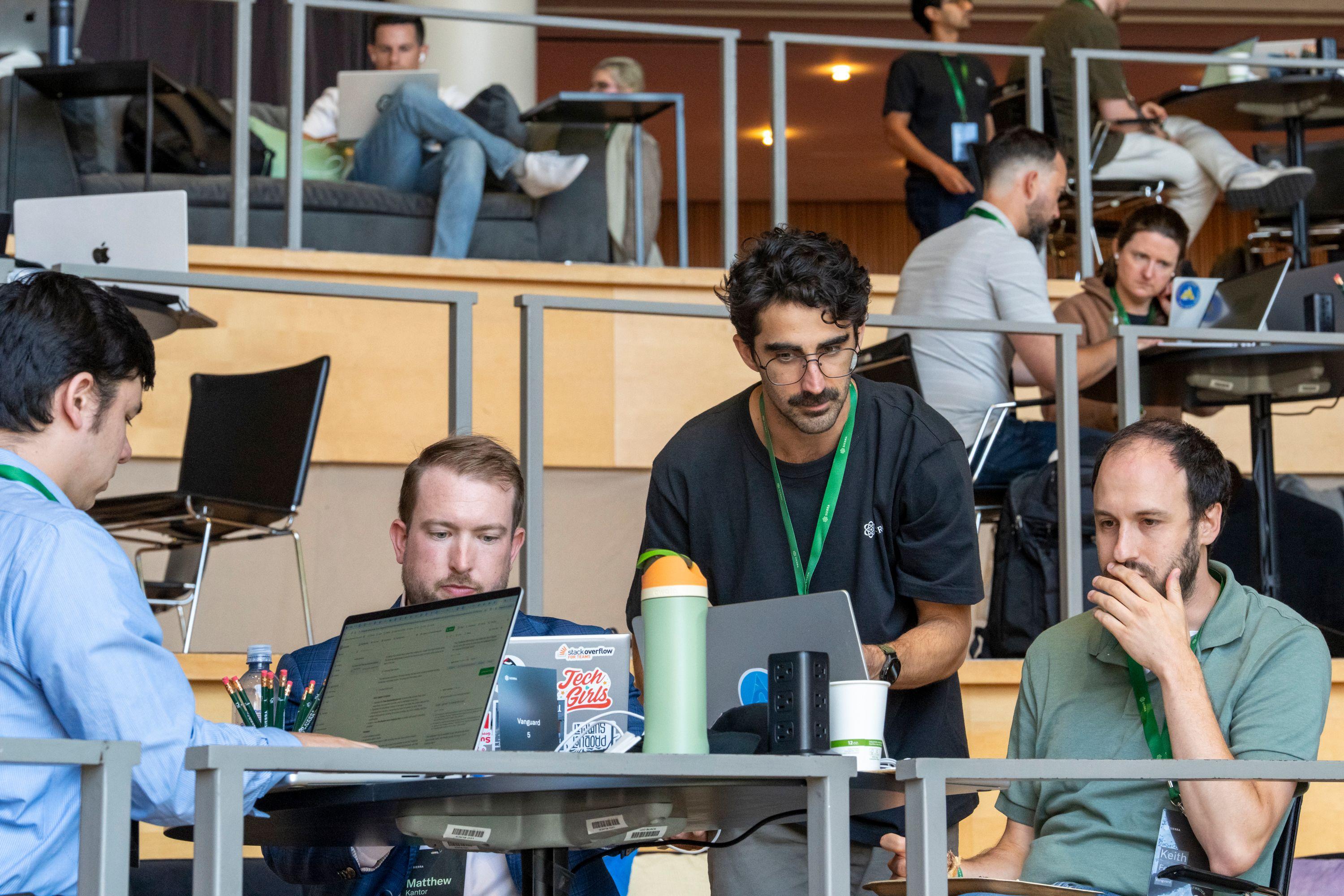
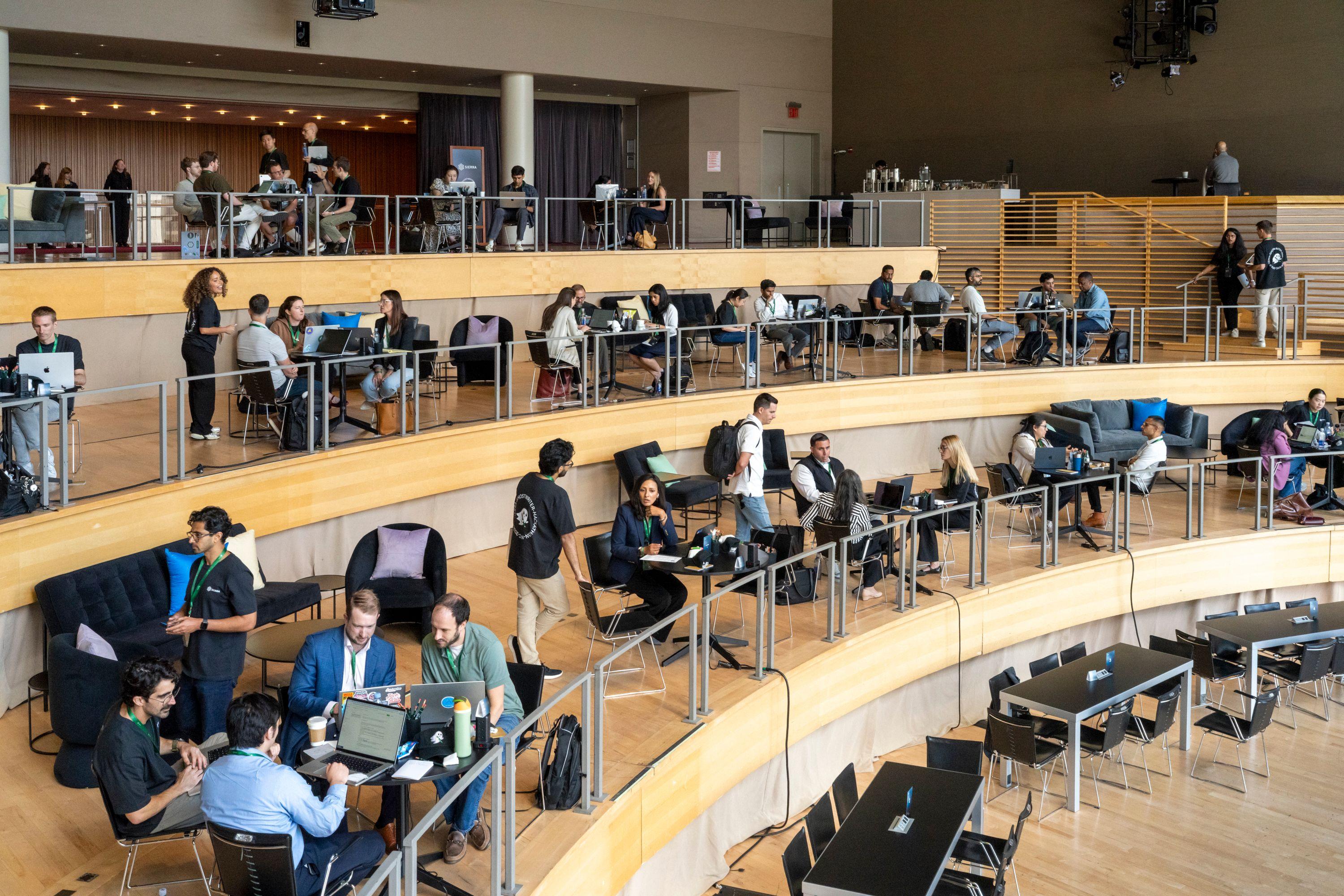
Last week, 30 people from 17 world-class companies — more than half with over $10B in annual revenue — joined Sierra for a Ghostwriter Hackathon.
Our guests spanned every level and discipline: managing directors, executive vice presidents, implementation specialists, engineers, and product managers.
Regardless of role or technical background, everyone left with a working AI agent.
What we built
The breadth of what these teams created was impressive, and demonstrated what’s possible with Ghostwriter:
- A claims intake agent with an SMS flow for uploading photos of damaged property.
- A loan qualification agent that verified financial information and assessed borrower eligibility in real time.
- A self-service onboarding agent that replaced a 20–40 minute technical setup by ingesting existing documentation.
- A pharmacy benefits voice agent built from 10,000 customer call transcripts.
- A complex distribution workflow generated directly from a Figma diagram.
- An account unlock agent deployed to production before the event was over.
As one attendee from a $5B+ ARR subscription business put it: "I built in three hours what previously would have taken six months." Another, from a $2B+ technology company, told us: "We pointed Ghostwriter at our knowledge base and it essentially one-shotted the agent in 15 minutes."
Three takeaways
Anyone can be a pirate. Steve Jobs once said, "It's more fun to be a pirate than join the Navy." Forty years ago, however, you still needed to know how to code to be a pirate. Today, tools like Ghostwriter, Claude Code, and Codex have changed that. One of our non-technical attendees had never been to a hackathon or built an AI agent. By the end of the day, they'd done both — and described the experience as "eye-opening" because of what they now realized they could build.
Generalists are back. One theme kept resurfacing: the best builders aren't necessarily the deepest specialists. They're the people with good taste, empathy for customers, the ability to translate problems into solutions, and the urgency to keep improving.
The 10× employee. Many of the leaders who attended weren't just evaluating Ghostwriter as a product. They were thinking about what it could do for their teams. One wanted to know firsthand whether less technical employees could meaningfully contribute to building production agents. Another described entire departments chomping at the bit to get hands-on with AI — not just to improve customer experiences, but to level up themselves.
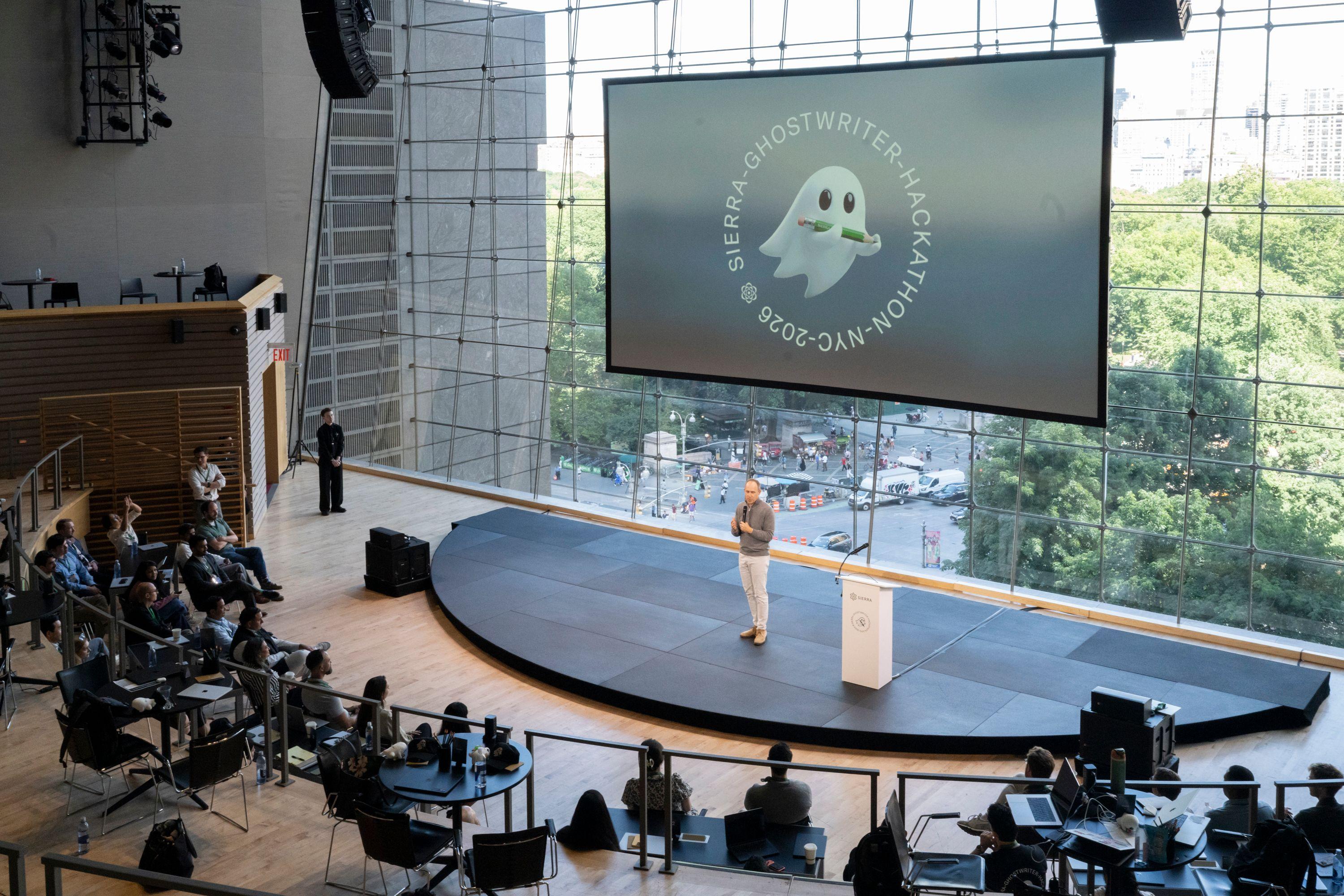
If there was one takeaway from the day, it's that the bottlenecks to building are shifting. It’s becoming dramatically easier. The scarce resource is no longer the ability to write code, but to identify the right customer problem, exercise good judgment, and move with urgency. That's a future we're excited to help build.