

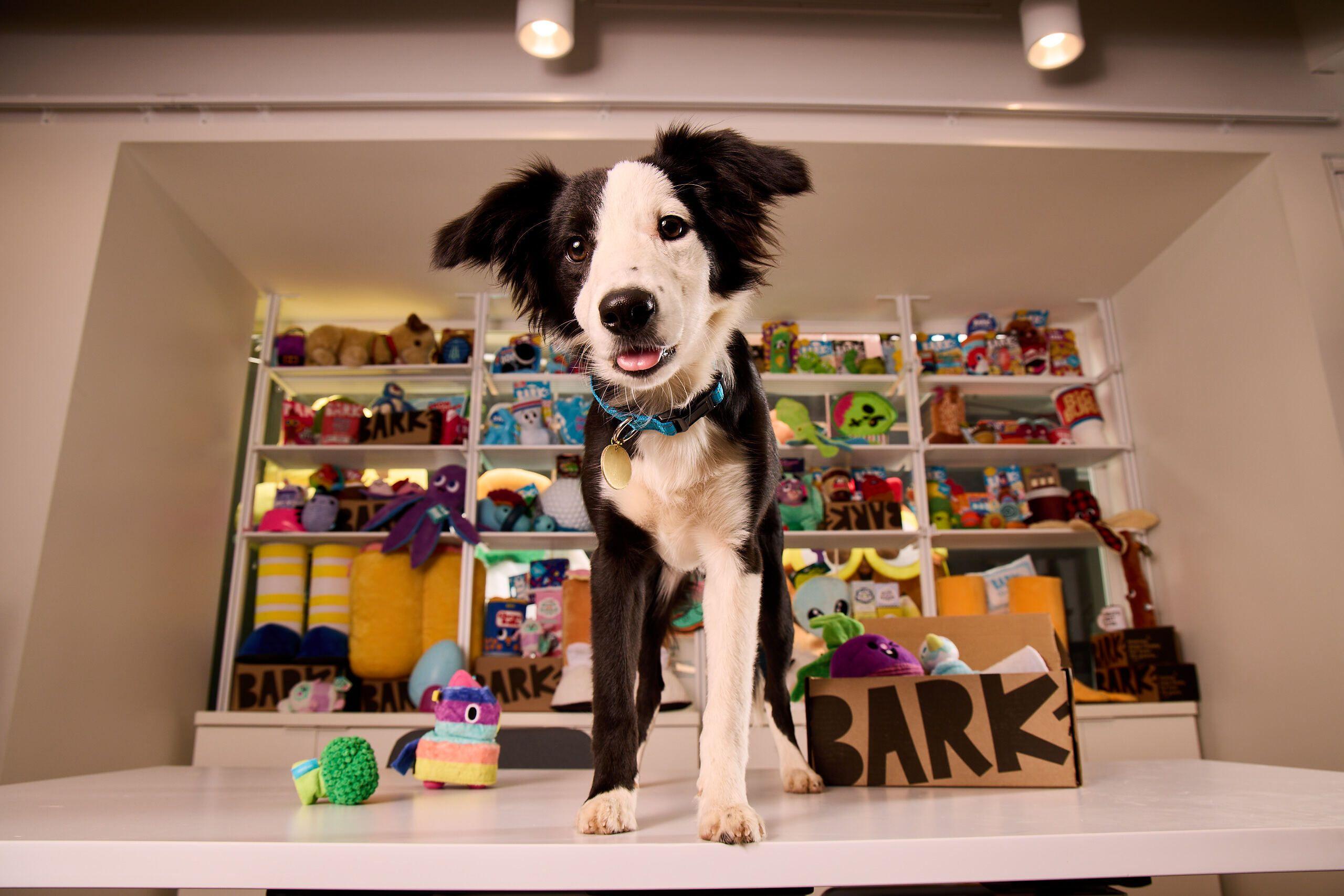
At BARK, the world’s most dog-centric company and the team behind BarkBox, customer experience isn’t a department, it’s the business. That philosophy shows up everywhere. The customer experience team, affectionately called the “Happy Team,” sits at the center of the company, alongside product, engineering, data, and marketing. Made up of dog-obsessed humans, their role goes beyond solving problems, centering instead on creating moments: the excitement of a BarkBox arriving at the door, the joy of a dog tearing into a toy, the delight a customer feels opening a themed box designed just for them.
BARK was founded on that idea of individuality. When CEO Matt Meeker couldn’t find toys suited for his Great Dane, Hugo, he set out to build something more tailored. Today, BARK operates at a massive scale, but the expectation hasn’t changed. Every dog is different, and every customer should feel understood.
Keeping it personal at scale
Scaling that level of care is where things get complicated. Every month, BARK ships tens of thousands of boxes, and with that comes a flood of customer conversations. Many are simple: Where is my order? What’s my tracking number? When will it arrive? Individually, these are quick to answer, but collectively, they’re overwhelming.
That said, BARK’s customers don’t just reach out for logistics. They also write in with detailed feedback about their dog’s preferences, they ask for help customizing their box, they share photos, stories, and milestones. Sometimes, they reach out during deeply emotional moments like when a dog passes away.
“At BARK, we want to make dogs as happy as they make us, so these aren’t just transactional conversations,” says Meghan Knoll, Chief Experience Officer at BARK. “Customers are reaching out about their dog’s preferences, their funny quirks, and sometimes even difficult moments. They’re personal and need to be handled with real care.”
For BARK’s Director of Customer Experience Technology and AI Programs Matt Sanger, the tension was clear. “How do we take care of the high-volume, lower-touch interactions,” he explains, “without taking time away from the moments that really matter?”
Automation alone wasn’t the answer. BARK wasn’t interested in cutting contact rates or replacing their team. If anything, they wanted the opposite: to create more space for human connection.
Training AI the BARK way
Instead of treating AI like a cost-cutting tool, BARK approached it like a new member of the team—one that needed to be trained, guided, and held to the same standard as any member of the Happy Team.
The first focus was clear: take on high-volume, repetitive questions like order tracking, shipping updates, basic account inquiries. Conversations that matter, but don’t require a dog expert.
Just as important was how those conversations felt. BARK’s brand is playful, emotional, and deeply human, and their AI agent, Scout, needed to reflect that—capable of striking the right tone at the right moment. As Sanger puts it, “There’s a right and a wrong time to use a dog pun.”
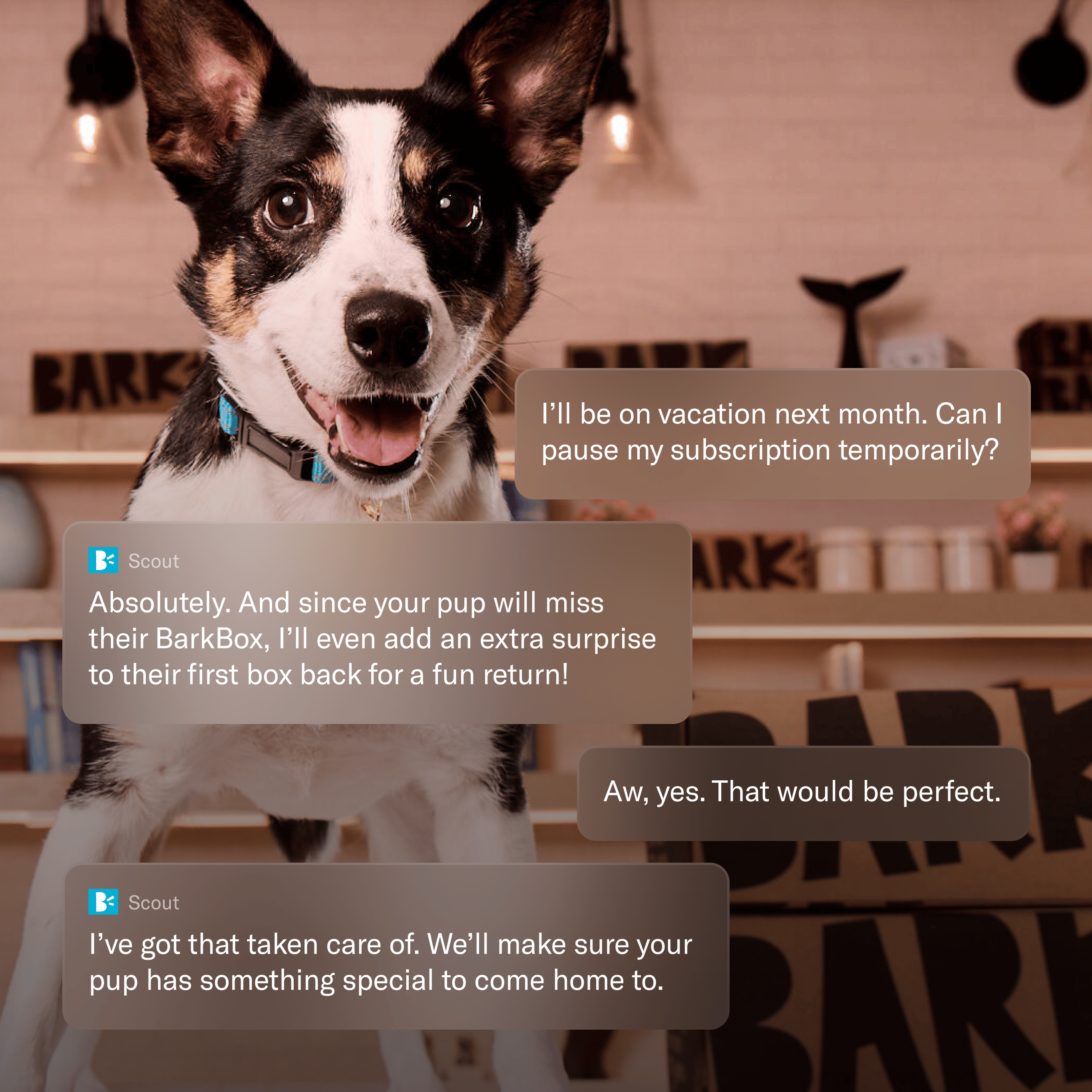
With Sierra, the team quickly built and refined that balance. Non-technical team members, especially those closest to the customer, could directly shape responses, ensuring the experience reflected real needs and behaviors.
Within the first year, the agent was handling roughly a quarter of all customer conversations, far exceeding expectations without sacrificing quality. BARK maintained a 98% customer satisfaction rate, holding the same high bar as the Happy Team.
Speed improved, too. With instant responses to common questions, chat response times dropped to under two minutes, eliminating long waits for simple answers.
And then there were the moments no one quite expected: customers chatting naturally with Scout, thanking it, even calling it a “good boy.”
“It’s funny,” Sanger says. “But it also shows that the experience feels real to them.”
Behind the scenes, the shift has been just as meaningful. By offloading repetitive work, the Happy Team has more time to create memorable, human experiences—whether that’s helping a customer customize their box to their dog’s preferences, offering support during a difficult moment, or turning a routine interaction into something special.
Scaling thoughtfulness
For BARK, AI isn’t about doing less, it’s about doing more, better. Knoll describes a future where no customer interaction goes unanswered and every customer feels seen. That was possible when the company was small, but has been difficult to maintain at scale until now. AI also unlocks deeper personalization, drawing on a customer’s history—past orders, preferences, and conversations—to create a more intuitive, less repetitive experience.
At the same time, BARK is clear about where team members remain essential: emotional conversations and moments that call for empathy will always belong to the Happy Team. Because at BARK, the goal hasn’t changed: to be the world’s most dog-centric company, devoted to making all dogs happy with the best products, services, and content, and creating the kind of experiences that make their humans just as happy along the way.